
What would a fly have to do to land in this category?
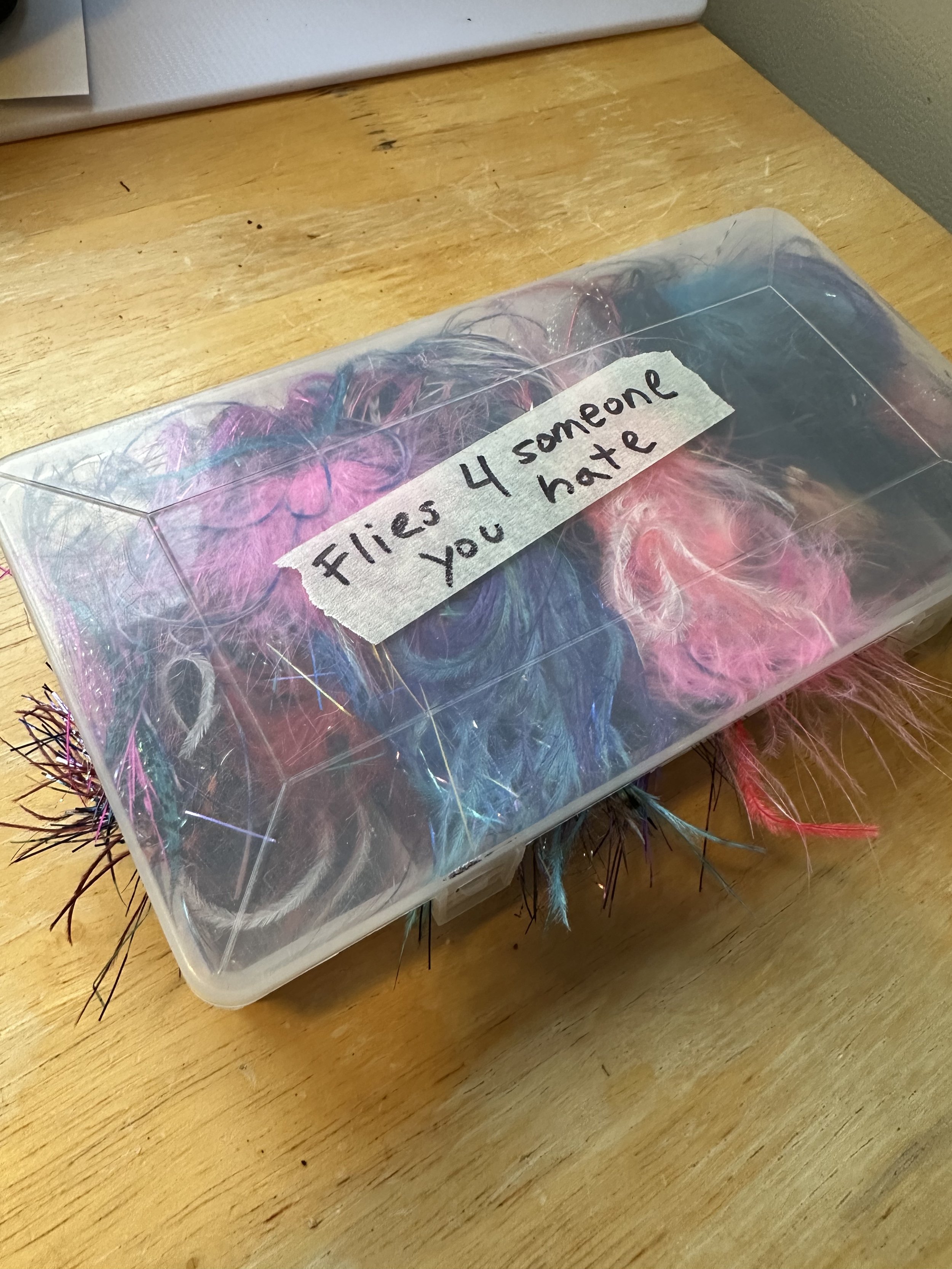
What would a fly have to look like to land in this category?
Sadly, I’m not gonna open this box and show examples (to protect the identities of the guilty), but the answer can be summarized in one word, “BULK” too much material, too much weight, too much . . . . too much. It's kind of funny that I landed on this idea for a blog post, given how some of my last posts were left. I’m still thinking about these concepts a couple of years later.
2025 was a decent season in Steelehad paradise despite the low return. One thing I noticed was that I was underwhelmed by many of the flies I saw in the boxes of my guests this year. I hesitate to say this because I don't want to offend but in their defense, lots of them are just clones and spin-offs of what we've used and had success with in the past. Same ol same ol, 3’ long black and blue. 3’ long pink. It seemed this year that if something wasn't a bit different, i.e., colour, sparse, material, originality... I wasn't totally stoked about it. One positive spinoff of realizing this, though, is that it lit a fire under my ass to do some tying when I got home.
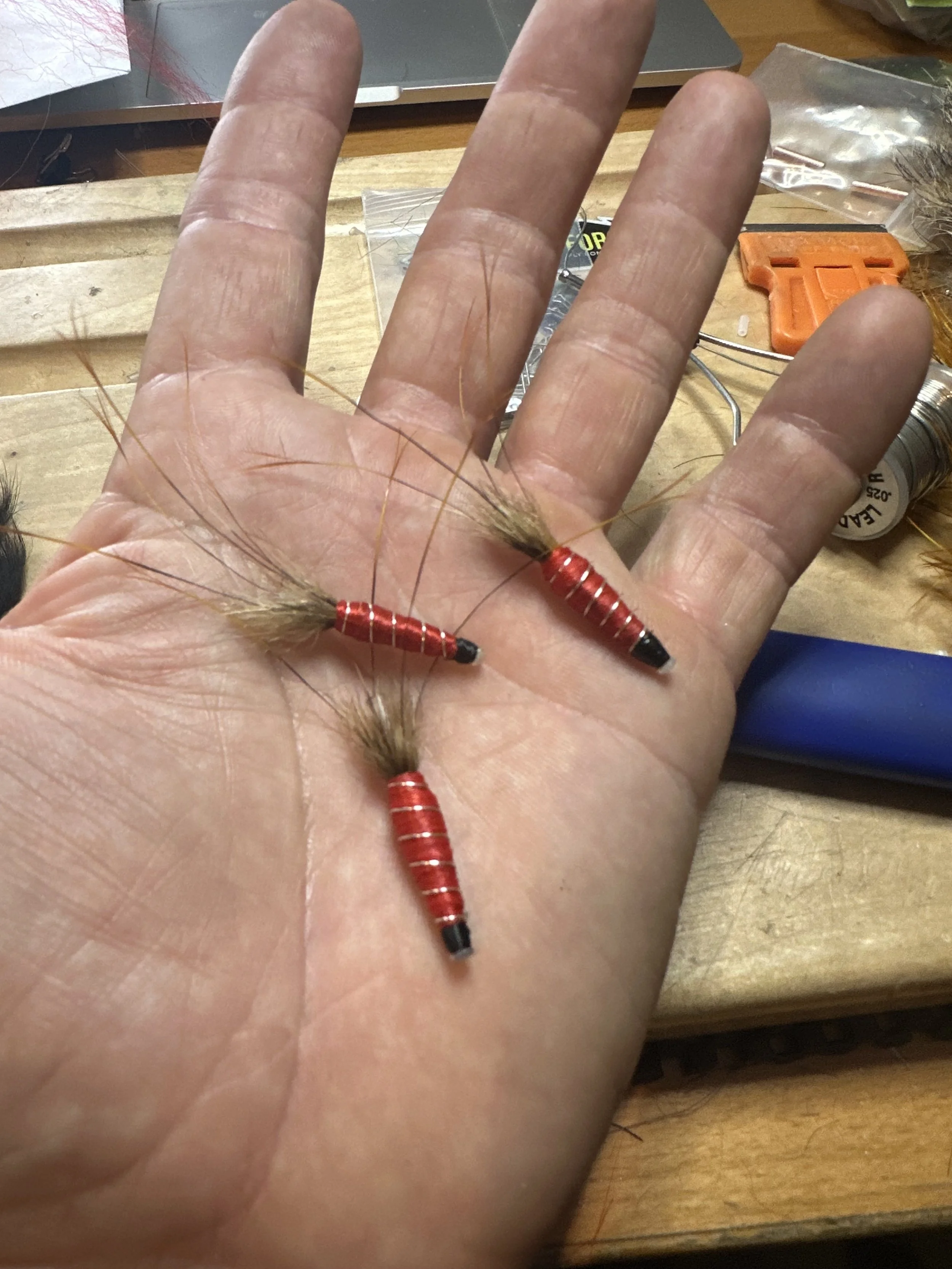
I’ve landed back on a “Francis” kick. So I’ve tied up a box of francis’ in various sizes and weights. A couple of things the Francis does well are casting easily and “getting down”. It truly is a bizarre and definitely different-looking little bug. More about the Francis below compliments of AI.
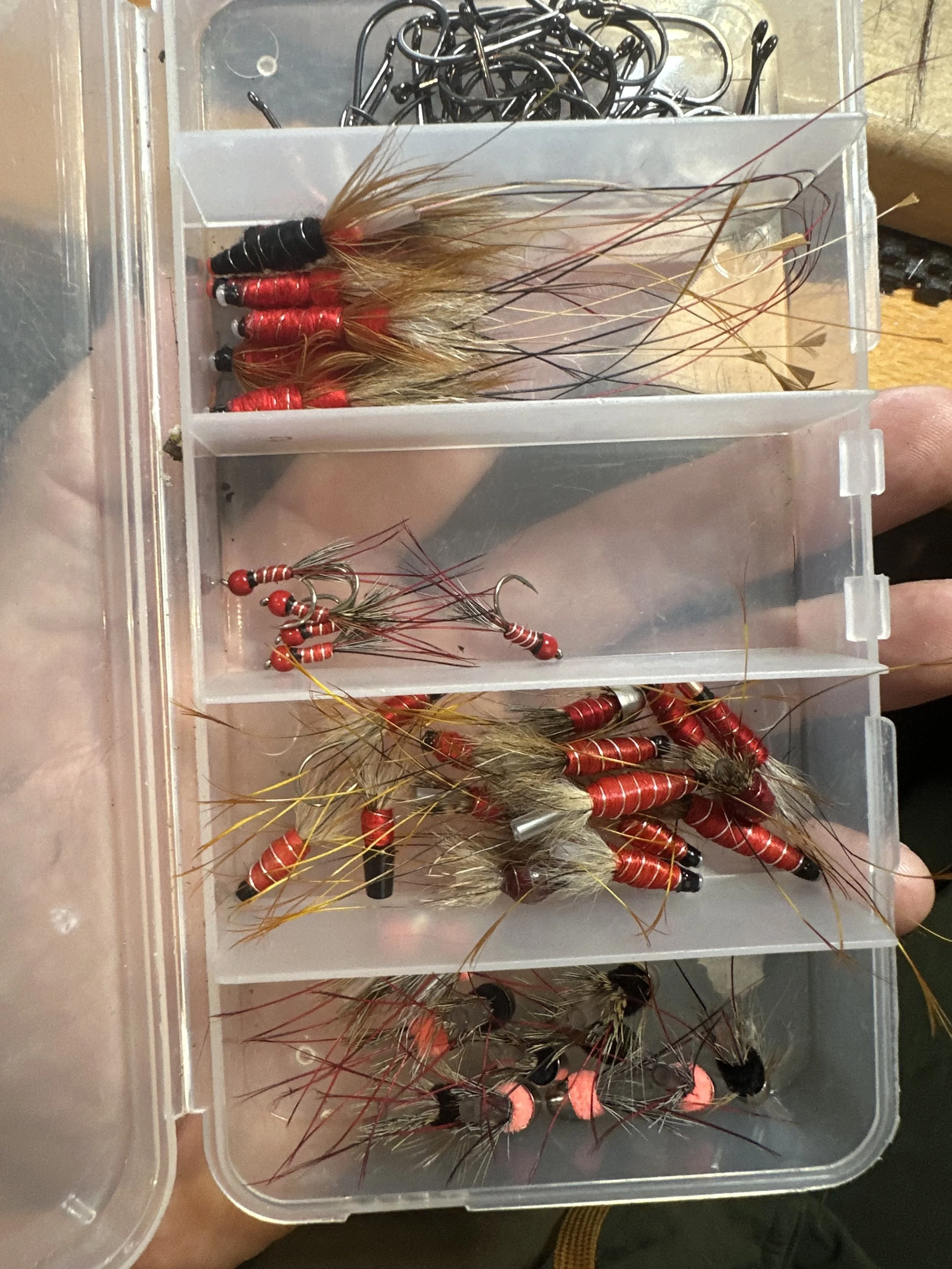
The Red Francis is a highly effective and popular Atlantic salmon fishing fly pattern, known particularly for its success in Iceland and Northern Europe. It was created in the mid-1960s by Englishman Peter Deane and named after his fly-tying assistant, Miss Frances Hydon.
Origin and Development
Initial Design: The original pattern was designed as a "prawn imitation". Its distinctive "odd looking" appearance, with a carrot-like body shape and antennae (feelers), was unique compared to other flies of the era and created significant movement in the water.
Instant Classic: The fly quickly became a success after catching many fish and soon dominated catches in Iceland. It was tied on tubes or hooks in various sizes and materials, with red and black becoming the most popular color variations.
Global Success: The pattern's effectiveness spread globally for both salmon and sea trout fishing, particularly in slow-moving water, eddies, and below waterfalls. It is now considered a must-have pattern for Atlantic salmon anglers.
Variations: The success of the Francis fly inspired many other effective patterns, including the Snælda, the Krafla, and the Fanc N Snaelda, many with origins in Iceland. Modern versions are often tied on copper or aluminum tubes and feature coneheads to help them sink deeper.
Usage
Anglers use the Red Francis fly by fishing it across the current using short, twitching pulls to mimic a live shrimp. The red color is generally considered effective in both clear and colored water, while the black version is popular for low, clear water conditions.