
Reluctance to lift
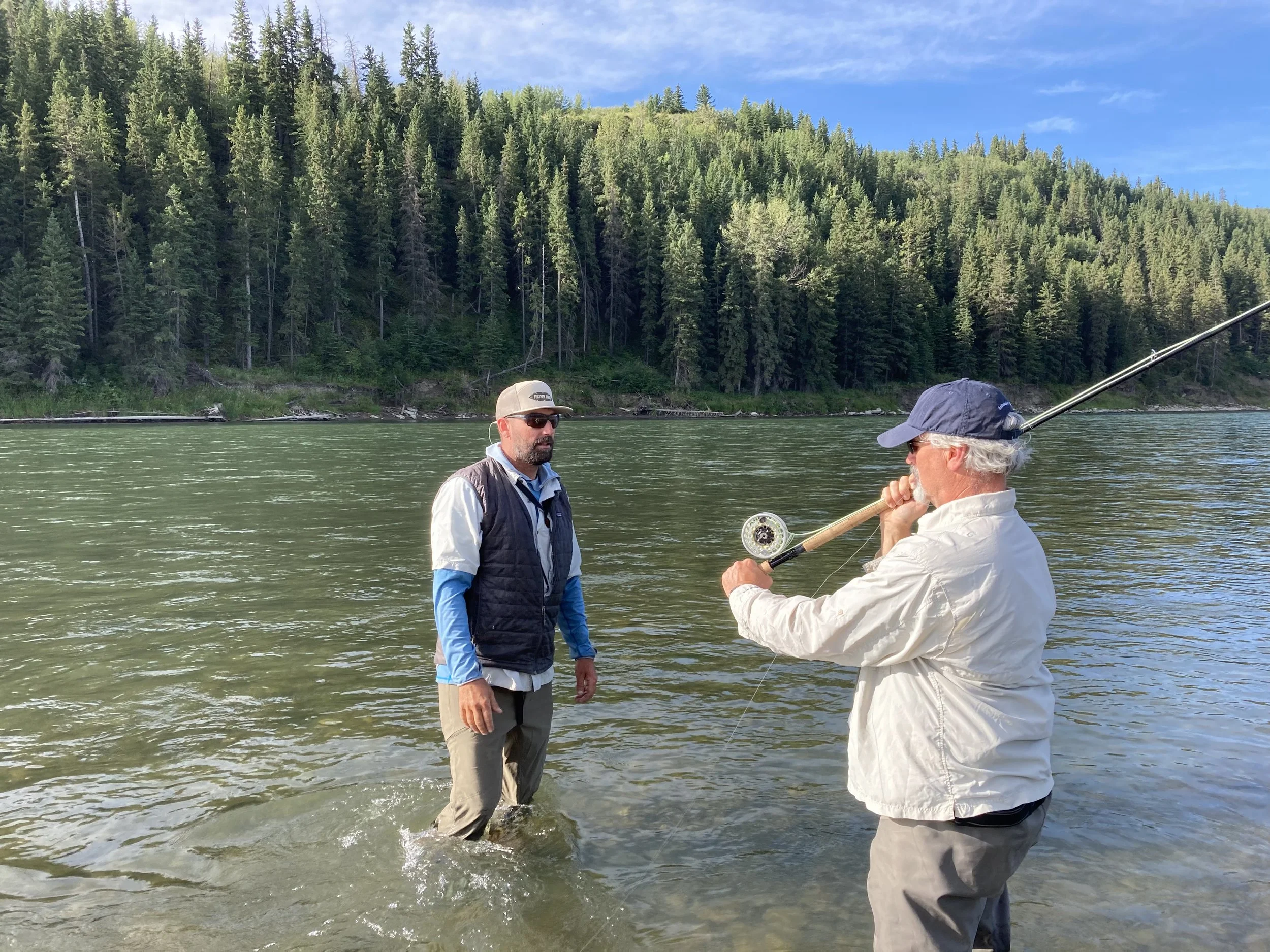
If there's one casting glitch or tendency or flaw or problem that I see over and over in students and clients... it is a “reluctance to lift.”
Now, admittedly, this is very difficult to put into words. I write this more to spark interest or a conversation next time we cast together. I’m gonna melt a few faces with this one, so if/when I lose you just ask me next time we have a rod in front of us. I have several great demos that I use to explain this phenomenon.
Ok, so what I am referring to here is the reluctance to lift the fly from the water when doing an anchor stroke on a sustained anchor cast (circleC/snap T or double spey). This is not limited to these casts. It can also be a thing with the dynamic anchor or touch and go, anchor casts like the single spey or snake roll. For now, we are just going to discuss the circle C or double spey casts.
If I lost you already, I apologize. This is kind of technical and it’d be much easier to show in a video (which I have aspirations of making) or even better in person, but this is what we have for now and if this msg only reaches a few people that it resonates with, than thats fine by me. Again, it's meant to spark interest or a convo.
Ok, a Spey cast requires 3 things: an anchor, a D loop and a forward cast. Each has its purpose and if the one preceding is not correct, it makes the next step worse.
Anchor - It’s purpose is to hold the d loop in place.
D-loop - is created by the sweep, which loads the rod and lines up the forward cast.
The forward cast unloads the rod and delivers the cast.
If you have a poor anchor placement, the sweep, load and D loops suffer and the forward cast is further affected. in otherwords . . . . . shit rolls downhill.
YOU NEED TO LIFT TO GET THE FLY FROM THE WATER. Then you are able to complete your anchor stroke, whether it is the C or the double spey. Now, I actually use different wording for each of these casts. For the C or snap T, I say “lift till the fly comes out of the water.” For the Double, I say ” lift till the fly comes to the surface.” It's a tiny, tiny difference, but nonetheless, that's how I explain it.
So, another way I refer to reluctance to lift or a cause of reluctance to lift is “being bullied by the sink tip.” Example: doing a circle C. When you don’t lift to get the sink tip out of the water, your c stroke can go from a lovely bulbous shape to a long, slender bunny ear shape, causing an anchor that is set too high. Now, from here, you sweep, you leave a bloody L, the forward cast suffers and your cast feels stuck to the water. sound familiar? Come see me. I can help you.